How to Choose an Electrician for an EICR: A Landlord's Guide
How landlords can choose the right electrician for a safe, valid EICR.

Written by
Michael Adrian
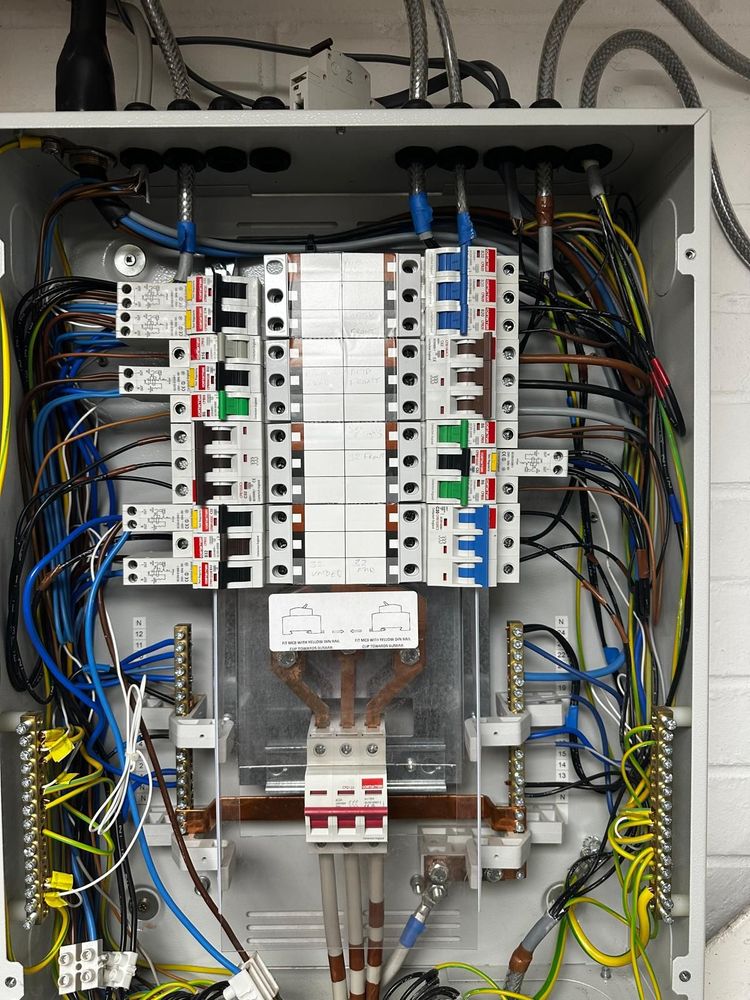
Three phase consumer unit
How to Choose an Electrician for an EICR: A Landlord's Guide
Do not choose an EICR electrician on price or a trade-body logo alone. You need to know who will carry out the inspection, whether they have the right periodic-inspection competence, and what evidence you will receive when the job is finished.
That matters more as the 1 October 2026 EAS change approaches. The change is an Electrotechnical Assessment Specification and scheme-competence requirement, not a new criminal law, but it makes the individual inspector's qualification, experience and ongoing CPD more important to check.
This guide gives you a practical way to compare electricians, ask for the right evidence and keep a clean compliance record. The landlord law covered here is England-specific. Qualification and scheme guidance is discussed in a UK electrotechnical context, so check the rules and acceptance requirements that apply to your property and client.
Quick summary
Before booking, ask for:
- The name of the person who will inspect the installation.
- Evidence of a relevant periodic-inspection qualification or accepted equivalent.
- Confirmation that the person and business have the relevant inspection and testing scope under their scheme or certification body, where applicable.
- Current insurance details and a written quote that explains the inspection scope.
- The expected report format and delivery date.
After the inspection, check that the report identifies the property and inspector, records the inspection and test results, explains observations and gives a clear overall outcome. Keep the report with any remedial-work evidence and the next inspection date.
What should a landlord check before booking?
Use this order. It keeps the useful checks separate from the sales pitch.
1. Who is actually carrying out the inspection?
Get the full name of the inspector, not just the trading name of the company. A firm may employ or subcontract more than one electrician, and the evidence you need relates to the person undertaking the periodic inspection and testing.
Ask whether the named person will attend personally. If the answer changes before the appointment, ask for the replacement inspector's details and evidence before work starts.
2. Does their competence match periodic inspection and testing?
An electrician who can install domestic equipment is not automatically evidenced as competent for every type of periodic inspection and testing. Ask specifically about EICRs and the relevant inspection scope.
For the October 2026 EAS change, the available guidance points to an appropriate Level 3 periodic-inspection qualification or accepted equivalent, at least two years' documented experience carrying out periodic inspection and testing, and ongoing CPD evidence. The exact route and scheme-grade requirements must be checked against the current guidance of the relevant certification body.
3. Is the business or person registered for the relevant work?
NICEIC or NAPIT registration can be a useful starting point, but registration is not the whole check. Ask the provider to confirm that the relevant person and scope cover periodic inspection and testing for the installation you want inspected.
The IET Electrotechnical Assessment Specification is the primary reference for the EAS requirements. NICEIC and NAPIT's EAS qualification guidance explain how their schemes apply the requirements. Do not assume that every certification body presents its evidence in exactly the same way.
4. Is the quote clear about the job?
The quote should say what is included. At minimum, ask whether the price covers the inspection and testing of the whole installation, how limitations will be handled, when the report will be sent, and whether VAT is included.
For a larger property, give the electrician useful information before they quote. The property type, number of consumer units, approximate circuit count, outbuildings, shared areas and access restrictions can all affect the time needed. A quote that ignores the scope is difficult to compare with one that explains it.
5. Are remedial works separate from the inspection decision?
An electrician may identify defects and offer to quote for remedial work. That is not the same thing as saying the arrangement is prohibited. The sensible check is transparency: make sure the inspection result, the remedial recommendations and any follow-on quote are clearly separated and itemised.
Do not accept a promise that an electrician can make an unsatisfactory report disappear by changing the wording. The report should reflect the installation and the evidence found during the inspection.
Who is qualified to carry out an EICR?
The useful question is not simply, “Is this person an electrician?” It is, “Can this person demonstrate the competence, experience and scope relevant to this periodic inspection and testing job?”
The EAS is an industry specification used by competent person schemes and certification bodies. It is not itself a statute. The October 2026 change is scheduled to tighten the competence expectations for periodic inspection and testing across certification bodies using the EAS. That is different from saying that every report is automatically a criminal-law document or that scheme registration alone decides legal validity in every situation.
For a landlord, the practical takeaway is simple: check the individual, the work category and the evidence. A current 18th Edition certificate or general electrical qualification may be useful, but it does not by itself prove the specific periodic-inspection qualification required for the work.
The NICEIC EAS changes guidance gives a plain-English explanation of the implementation date and competence requirements. Treat current scheme guidance as live information, especially when booking close to the October 2026 deadline.
What changes on 1 October 2026?
The scheduled EAS change affects the competence evidence expected for periodic inspection and testing. The approved research for this article identifies three practical parts to check:
- an appropriate Level 3 qualification or accepted equivalent;
- at least two years' documented experience undertaking periodic inspection and testing;
- evidence of ongoing CPD.
The qualification must match the relevant scope. Ask the electrician or certification body to confirm the current route rather than relying on a social-media summary or a course advert.
This is not a reason to panic or to assume that every experienced electrician has suddenly become incapable of doing an EICR. It is a reason to ask for written evidence and to check the current qualification guide before you book.
The change is also not specific to NICEIC. NICEIC says it applies across certification bodies using the EAS, while each body may have its own administration and public register. That is why “we are registered” is a starting point, not the whole verification process.
For the deeper technical explanation, see the October 2026 EAS qualification changes guide.
Which qualifications should you ask about?
City & Guilds 2391-51 and 2391-52 are common examples of inspection and testing awards associated with periodic inspection and testing. They are not automatically the complete list of accepted routes.
Older qualifications and equivalents may be accepted in some circumstances, and scheme-grade requirements can affect the evidence needed. The current NICEIC acceptable qualifications guide and NAPIT guidance should be checked before treating a certificate as sufficient.
Ask the electrician:
- Which qualification or accepted equivalent covers the periodic inspection and testing work?
- Is the qualification current and within the relevant scope?
- Can you show evidence of the required inspection and testing experience?
- How do you keep your CPD evidence?
- Which certification body or scheme guidance applies to your work?
You do not need to become an electrician to check these points. If a qualification is unfamiliar, ask the provider or relevant scheme body to confirm that it is accepted for the work. A confident answer without evidence is not the same as verification.
The landlord's pre-booking checklist
Save the answers and documents in your property file. A short email is better than relying on a phone conversation you cannot reconstruct later.
| Check | What to ask for | Why it matters |
|---|---|---|
| Inspector identity | Full name of the person attending | Confirms whose competence you are checking |
| Periodic-inspection competence | Relevant Level 3 qualification or accepted equivalent | Matches the inspection and testing work |
| Experience | Evidence of at least two years' periodic inspection/testing experience for the October 2026 EAS change | Shows the qualification is supported by practical experience |
| CPD | A clear explanation of how ongoing CPD is recorded | Supports current competence evidence |
| Scheme or body scope | Relevant registration or certification-body confirmation | Helps check the work category and client acceptance |
| Insurance | Current public liability and any relevant professional cover details | Gives you basic provider evidence before booking |
| Quote | Scope, price, VAT, access assumptions and report turnaround | Makes competing quotes comparable |
| Report | What the report will identify and when you will receive it | Avoids an incomplete compliance record |
Some of this evidence may be confirmed by the scheme or certification body rather than displayed on a public register. If the provider cannot answer a reasonable question about the person, qualification or scope, pause the booking and ask for clarification.
How to compare EICR quotes
The cheapest quote is not automatically poor, and the most expensive quote is not automatically thorough. Compare what you are buying.
Check whether the electricians have allowed for:
- the size and type of property;
- the number of circuits and consumer units;
- outbuildings, communal areas or other parts of the installation;
- access to all rooms, boards and equipment;
- testing limitations and the way those limitations will be recorded;
- report preparation and delivery;
- VAT and any travel or other additional charges.
A very low quote deserves questions if the scope, time on site or report delivery is unclear. It may be based on a smaller inspection than you need. It may also leave remedial recommendations bundled into a later sales conversation.
Use the EICR cost guide for 2026 for wider pricing context, but do not treat a published price as a substitute for a property-specific scope.
What should be in the completed EICR report?
There is no single landlord checklist that can replace the report itself, but a useful report should identify the property and installation, state the extent and any limitations, record inspection and testing results, list observations and codes, and give an overall outcome.
It should also identify the inspector and business details, along with the date of the inspection. If the report is missing the inspector's details, property identification, test information or clear observations, query it before filing it as complete.
For an explanation of common observation codes, see EICR observation codes. The code is part of the finding, not a complete repair specification.
If the report is unsatisfactory, keep the original intact. Ask for a written remedial scope, get completion evidence for the work carried out, and record which observations have been addressed. Do not replace the original report with a cleaner-looking document that hides the history.
What if the electrician cannot prove their qualifications?
Do not book first and investigate later. Ask for the relevant qualification or equivalent, the inspection and testing experience evidence, and the scheme or certification-body confirmation that applies to the job.
If the evidence is unavailable, use another provider or ask the relevant scheme body to confirm the position in writing. That is quicker and safer than arguing over the meaning of a certificate after an inspection has been completed.
Be especially careful with these shortcuts:
- “I am NICEIC registered” without the named inspector or relevant scope.
- A 2391-52 certificate presented as the only thing that ever matters, without checking current scheme guidance.
- A current 18th Edition certificate presented as proof of periodic-inspection competence.
- A cheap quote that does not explain what will be inspected.
- An offer to test now and have another person sign the report later.
These are not proof that a provider is unsuitable in every case. They are prompts to ask better questions and obtain evidence before committing to the inspection.
England-specific landlord duties
For private rented property in England, the 2020 regulations require the landlord to obtain an electrical safety report at least every five years, subject to the wording and exemptions in the regulations. They also set requirements around providing reports and dealing with dangerous defects through the prescribed process.
The exact duties depend on the circumstances. Use the England regulations and current government guidance for recipients, deadlines and remedial steps.
Do not present the England five-year cycle as a universal UK-wide landlord rule. Scotland, Wales and Northern Ireland have different legal frameworks and your client, insurer or scheme may also set additional requirements.
Keeping the compliance record together
Once you have chosen a properly evidenced inspector, keep the admin around the inspection in one place:
- the electrician's name and evidence supplied before booking;
- the quote and agreed scope;
- access notes and any recorded limitations;
- the completed EICR;
- remedial quotations, invoices and certificates where relevant;
- copies or confirmation showing the report was provided to the required parties;
- the inspection date and next due date.
TestFast can help electricians, landlords and agencies keep EICR records and reports organised in a consistent workflow. It does not verify an electrician's qualifications, replace professional judgement or make an EICR legally compliant. The technical decision stays with the competent inspector.
The useful outcome is a report you can retrieve, understand and support with evidence later. See EICR software for the workflow option.
FAQs
Do landlords have to use NICEIC or NAPIT?
Not necessarily. NICEIC and NAPIT are examples of certification bodies and scheme providers. The right check is whether the individual and business can demonstrate the competence and scope relevant to the inspection, and whether their report will be accepted for the property and client requirements.
Is a 2391-52 certificate the only qualification accepted for an EICR?
No. It is a common example, but the accepted route depends on the current qualification guidance, relevant equivalents and scheme requirements. Check the live NICEIC or NAPIT guidance rather than treating one course number as a universal rule.
Can an experienced electrician without 2391 carry out an EICR?
Do not decide from the course number alone. Ask for the qualification or accepted equivalent, documented periodic-inspection and testing experience, CPD evidence and the relevant scheme or certification-body confirmation. The current guidance controls the route.
Is an EICR electrician the same as a domestic installer?
Not automatically. Domestic installation work and periodic inspection and testing are related, but the evidence for one does not automatically prove the other. Check competence for the actual EICR scope.
Can the electrician who identifies defects also carry out the remedial work?
The approved material supports a transparency recommendation, not a universal prohibition. The inspection result and remedial scope should be clearly recorded, the work should be carried out by a competent person, and the completion evidence should match the work done.
How often does a rented property need an EICR?
In England, the private-rented-sector regulations generally require an inspection at least every five years, subject to their wording and exemptions. Do not apply that statement automatically across the UK.
The final decision
Before you book, verify the person, qualification, experience, CPD and scope. Then compare the inspection quote, not just the headline price.
After the visit, check the report identifies the property and inspector, records the results and explains any observations. Keep the report with the remedial evidence and next due date.
That is the whole job in plain English: verify the person and the scope, then verify the report.
Ready to transform your EICR workflow?
Join hundreds of UK electricians who are saving hours on every report with TestFast.