Common EICR Failures: Top Defects Found During Electrical Inspections
The 10 most common EICR failures mapped to BS 7671 regs and C1/C2/C3 codes.

Written by
Michael Adrian
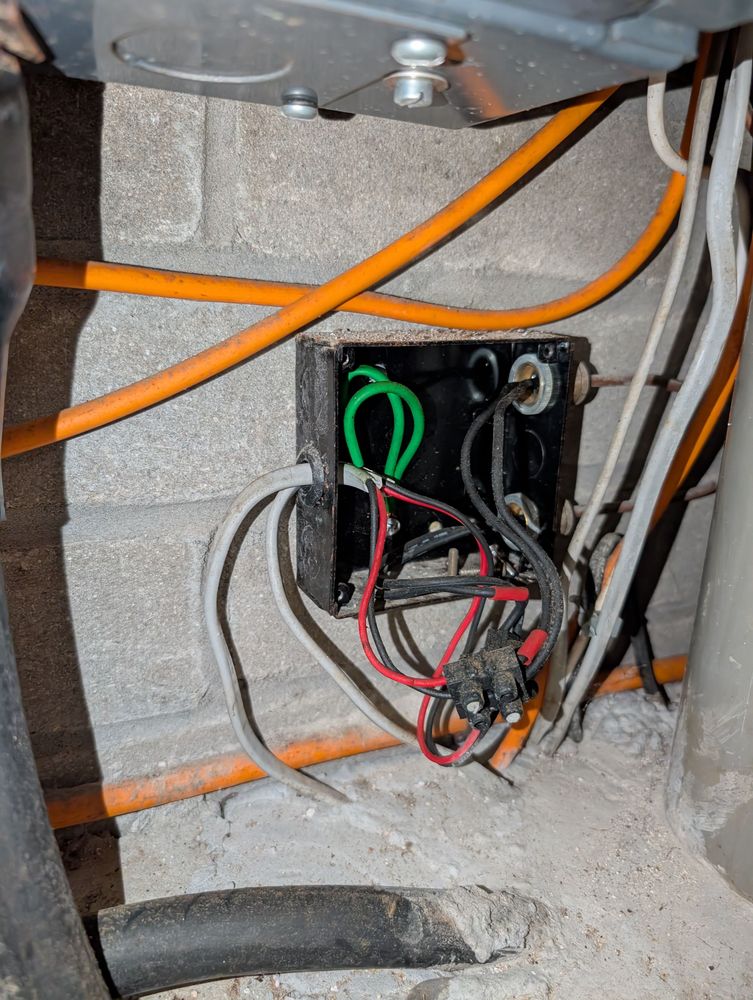
Exposed live contacts junction box
Common EICR Failures: Top Defects Found During Electrical Inspections
EICRs fail for the same handful of reasons, most of the time. If you've done a few hundred inspections, you already know the pattern — no RCD, missing bonding, damaged wiring, DIY mess. The reports look different, but the defects don't.
This article maps the ten most common EICR failures to their BS 7671 regulations, GN3 code classifications, and example observation wording. Whether you're an electrician writing better observation notes or a landlord trying to figure out if your property will pass, this is the structured version the other listicles skip.
For a deeper breakdown of what each code means, see our EICR Codes Explained guide.
What Makes an EICR Unsatisfactory?
An EICR is classified as unsatisfactory when the report contains any C1, C2, or FI observation. If the only observations are C3, the installation can still be reported as satisfactory.
The classification codes come from Table 3.5 of IET Guidance Note 3, not from BS 7671 itself. BS 7671 Chapter 65 governs the periodic inspection process, but the coding system lives in GN3. That distinction matters when someone asks you where the codes are defined.
Here's the quick reference:
| Code | Meaning | Report Result | Action |
|---|---|---|---|
| C1 | Danger present | Unsatisfactory | Make safe on discovery |
| C2 | Potentially dangerous | Unsatisfactory | Urgent remedial action |
| C3 | Improvement recommended | Satisfactory (if only C3s) | Recommend improvement |
| FI | Further investigation needed | Unsatisfactory | Investigate before relying on the installation |
The official BS 7671 model form wording is clear: items classified C1 should be made safe on discovery where practicable. C2 means urgent remedial action is needed — the danger isn't immediate, but the single-fault-to-danger principle applies. If one additional failure could put someone at risk, it's C2.
FI means the inspector couldn't fully assess something and needs further investigation before the installation can be relied on. It also makes the report unsatisfactory.
The 10 Most Common EICR Failures
1. Missing or Inadequate RCD Protection (C2)
This is the single most common C2 observation in domestic installations. BS 7671 Regulation 411.3.3 requires socket-outlet circuits rated up to 32 A to have 30 mA RCD protection. If they don't, it's a C2 in most domestic properties.
The nuance: absence of RCD doesn't automatically fail every EICR. Inspectors use engineering judgement — some circuits may not require RCD protection depending on use and location. But in practice, most socket circuits in homes will trigger a C2.
Typical observation wording: "No RCD protection on socket-outlet circuits. Potential danger present — risk of electric shock under fault conditions. (C2)"
2. Poor or Missing Earthing and Bonding (C1/C2)
Missing or inadequate earthing and bonding is one of the most frequent causes of unsatisfactory EICRs. Main bonding to gas and water services is typically 10 mm copper for TN-S and TT systems — though sizing depends on the earthing system and BS 7671 Table 54.7, so don't treat 10 mm as universal.
If the main earthing terminal is missing or the bonding to extraneous-conductive-parts is absent, the fault path is broken. That's potentially dangerous — C2. If the installation has no effective earthing at all, that's C1.
Typical observation wording: "Main protective bonding to water service missing. Potentially dangerous — fault current may not have a path to earth. (C2)"
3. Damaged or Exposed Wiring (C1/C2)
Cables with damaged insulation, exposed conductors, or mechanical damage are a regular finding, especially in older properties and DIY jobs. If live parts are accessible, it's C1. If damage could lead to live parts becoming accessible, it's C2.
This one's straightforward — if you can see conductor through the insulation, or the cable is crushed against a sharp edge, code it.
Typical observation wording: "Twin and earth cable in loft space with outer sheath damaged, live conductors exposed. Danger present. (C1)"
4. Outdated or Non-Compliant Consumer Units (C2/C3)
Here's where it gets nuanced. A plastic consumer unit is not an automatic EICR failure. It only becomes a C2 if there are aggravating factors — evidence of thermal damage, missing components, cracked or loose case, or it's in an escape route without appropriate fire rating. Without those factors, an older plastic CU is typically C3.
BS 7671 Amendment 2 (2022) requires consumer units in domestic households to be metal-clad or enclosed in a fire-rated cabinet. But that applies to new installations and replacements — existing plastic CUs don't automatically fail unless they present an actual risk.
Typical observation wording (C3): "Plastic consumer unit installed. No evidence of thermal damage. Recommend replacement with non-combustible enclosure. (C3)"
Typical observation wording (C2): "Plastic consumer unit with cracked case in escape route. Potentially dangerous — fire risk. (C2)"
5. Deteriorated Wiring and Insulation (C2)
Older installations often show insulation resistance readings below acceptable thresholds. Regulation 643.3 requires insulation resistance testing at 500 V DC for low-voltage circuits. Readings below 1 MOhm are a C2 observation per GN3 examples.
This is common in properties with wiring from the 1960s-1980s where rubber or early PVC insulation has degraded. You'll often find it alongside other age-related issues like outdated fuse carriers or no CPC on lighting circuits.
Typical observation wording: "Insulation resistance on lighting circuit below 1 MOhm at 500 V DC. Potentially dangerous — risk of insulation breakdown under fault. (C2)"
6. DIY and Non-Compliant Electrical Alterations (C2)
Unqualified alterations are a recurring problem. Borrowed neutrals, incorrect cable sizing, junction boxes buried in walls, spurs off spurs — the list goes on. These are typically C2 because they introduce unknown risk into the installation.
Borrowed neutrals are one that less experienced inspectors sometimes miss. If you're getting odd readings on a ring circuit continuity test — readings that don't match what the cable layout suggests — a borrowed neutral between circuits is a common culprit.
The nuance on DIY: it's not an automatic fail. The question is whether the alteration introduces actual or potential danger. A neat, correctly-wired addition by a competent person may not warrant a code at all. But most DIY work isn't that.
Typical observation wording: "Evidence of unqualified alterations — additional socket added as unfused spur from ring circuit. Potentially dangerous — no overcurrent protection on spur cable. (C2)"
7. Overloaded Circuits (C2/C3)
Circuits loaded beyond their design capacity show up in two ways: overloaded protective devices (fuses or MCBs running above rating) and undersized cables for the load. The severity depends on whether it's actively dangerous or just not ideal.
If a circuit is regularly tripping because of overload, or you find a 32 A MCB on a cable rated for 20 A, that's C2. If the circuit is within rating but has limited headroom, it might be C3.
Typical observation wording: "Ring final circuit protected by 32 A MCB, but cable csa appears 1.0 mm². Potentially dangerous — cable rating exceeded. (C2)"
8. Incorrect or Inadequate Circuit Protection (C2)
This covers a range of issues: wrong protective device rating, no overload protection, incorrect RCD type, missing AFC protection where required. The most common version is protective devices that don't match the circuit design.
Type AC RCDs are a growing issue. With increasing electronic loads — EV chargers, LED drivers, consumer electronics — DC leakage can saturate a Type AC RCD and stop it tripping. Where DC leakage is present, a Type AC RCD can be coded C2. In installations without DC leakage sources, it may not warrant a code. The judgement depends on what's connected.
Typical observation wording: "Type AC RCD protecting circuits with electronic loads likely to produce DC leakage. Potentially dangerous — RCD may not operate under fault. (C2)"
9. Signs of Overheating and Thermal Damage (C1/C2)
Discoloured sockets, heat-damaged switch faces, melted insulation at connection points — these are serious findings. Active overheating is C1. Evidence of past overheating that's no longer occurring may be C2 depending on whether the cause has been addressed.
This is often found at consumer unit connections, especially on older installations where terminals have worked loose over years of thermal cycling. It's also common on shower circuits where the isolator has been undersized.
Typical observation wording: "Heat damage to shower isolator switch, evidence of melting at terminals. Danger present — risk of fire. (C1)"
10. Unsafe Installations in Special Locations (C2)
Bathrooms, gardens, and other special locations have tighter requirements. One of the most common C2 findings in residential properties is bathroom light fittings where the bulb can be directly touched without removing a cover. In bathroom zones, that's a failure.
Outdoor installations without appropriate IP rating, SWA cables without proper earthing, and garden lighting without RCD protection are all regular C2 findings.
Typical observation wording: "Bathroom luminaire with exposed bulb accessible in Zone 2. Potentially dangerous — risk of electric shock. (C2)"
EICR Failure Examples Table
| Defect | Typical Code | BS 7671 Reference | Example Observation Wording |
|---|---|---|---|
| No RCD on socket circuits | C2 | Reg 411.3.3 | No RCD protection on socket-outlet circuits. Potential danger — risk of electric shock. |
| Missing main bonding | C1/C2 | Reg 411.3.1 / Table 54.7 | Main protective bonding to water service missing. Fault current path incomplete. |
| Damaged cable insulation | C1/C2 | Reg 526.1 | Outer sheath damaged, live conductors exposed. Danger present. |
| Plastic CU (no other defects) | C3 | Reg 532.2.1 (A2) | Plastic consumer unit. Recommend non-combustible replacement. |
| Low insulation resistance | C2 | Reg 643.3 | Insulation resistance below 1 MOhm at 500 V DC. Risk of insulation breakdown. |
| Unqualified alterations | C2 | Reg 530.1 | Unfused spur from ring circuit. No overcurrent protection on spur cable. |
| Overloaded circuit | C2/C3 | Reg 433.1 | Cable csa insufficient for protective device rating. Cable may be overloaded. |
| Type AC RCD with DC leakage | C2 | Reg 531.3.3 | Type AC RCD where DC leakage likely. RCD may not operate under fault. |
| Overheated connections | C1/C2 | Reg 526.1 | Heat damage at terminals. Risk of fire. |
| Bathroom luminaire in Zone 2 | C2 | Reg 701.1 | Exposed bulb accessible in Zone 2. Risk of electric shock. |
EICR Myths That Cost Landlords Money
Myth: A plastic consumer unit is an automatic fail
It isn't. A plastic CU without any other defects is typically a C3 — improvement recommended, not unsatisfactory. It only becomes C2 if there's evidence of thermal damage, cracked or loose casing, missing components, or it's in an escape route without fire-rated enclosure.
Plenty of landlords have been told they need a full board replacement when a C3 was the correct code. If the only issue is the material of the enclosure, that's not an automatic fail.
Myth: No RCD means automatic failure
Usually, but not always. Reg 411.3.3 requires RCD protection on socket circuits up to 32 A, so in most domestic properties, missing RCD on sockets will be C2. But inspectors apply engineering judgement — some circuits may not require it depending on use and location.
In practice, most socket circuits in homes will get a C2. But "no RCD = automatic fail" is too blunt.
Myth: A previous pass guarantees the next one
EICRs are point-in-time assessments. Standards change, wiring deteriorates, and a property that passed five years ago may have developed faults since. A previous satisfactory report doesn't predict the next result.
C3 observations from a previous EICR can become C2 observations as conditions deteriorate. A plastic CU that was C3 last time might now have thermal damage. An RCD that tested fine before may now fail its functional test.
Myth: DIY work automatically fails an EICR
The question isn't who did the work — it's whether the work is safe and compliant. Unqualified alterations that introduce danger will be coded. But a competent person's alteration that meets BS 7671 requirements won't fail just because it wasn't done by a registered electrician.
In practice, most DIY electrical work does introduce problems. But the code is about the defect, not who caused it.
What Happens After a Failed EICR?
For landlords in England, the Electrical Safety Standards in the Private Rented Sector Regulations 2020 set the framework. These were extended in 2025 to include the social rented sector.
The key obligations:
- C1 defects must be made safe on discovery, where practicable.
- C1, C2, and FI remedial work must be completed within 28 days of the report, or within the shorter period specified on the report.
- Landlords must provide a copy of the EICR to tenants, and confirmation that remedial work has been completed.
- The maximum penalty for non-compliance is £30,000 per breach, enforced by local authorities.
For electricians, the report is where the workflow starts, not ends. Clear observation wording helps the remedial contractor understand exactly what needs fixing — vague codes without context lead to callback queries and wasted time.
The official guidance is available on GOV.UK.
How TestFast Helps
If you've got an EICR report in front of you and need to interpret what the codes mean, the Code Breaker tool breaks down every C1, C2, C3, and FI code on your report in seconds. Paste in your observations and get plain-English explanations with regulation references.
For electricians doing high-volume EICRs, TestFast's EICR workflow handles report generation, observation library lookup, and code classification in a way that's faster than fighting with certification body portals. If you're doing 15+ inspections a week, the workflow difference adds up.
For technical reference during inspections, our Max Zs Values and Earth Loop Impedance Test Values pages give you the disconnection time thresholds you need without reaching for the big yellow book.
FAQ
Is a C3 a fail?
No. A C3 means improvement recommended. If the only observations on the report are C3, the EICR is still satisfactory.
How long do I have to fix a C2?
For rental properties, 28 days from the report date — or the shorter period stated on the report. C1 defects should be made safe immediately.
Can I still rent out a property with a C3?
Yes. C3 observations don't make the report unsatisfactory. The property can be legally rented. You should still address C3 items when practical — they can become C2 over time.
What is the most common EICR failure?
Missing RCD protection on socket-outlet circuits. Reg 411.3.3 requires 30 mA RCD protection on sockets up to 32 A, and this is the most frequently occurring C2 in domestic installations.
Does a plastic consumer unit fail an EICR?
Not automatically. A plastic CU without other defects is typically C3. It becomes C2 if there's thermal damage, cracking, missing components, or fire-rating issues in an escape route.
Ready to transform your EICR workflow?
Join hundreds of UK electricians who are saving hours on every report with TestFast.