PAT Testing Guide: What Electricians Need to Know in 2026
A practical UK PAT testing guide: risk, records, competence and EICR boundaries.

Written by
Michael Adrian
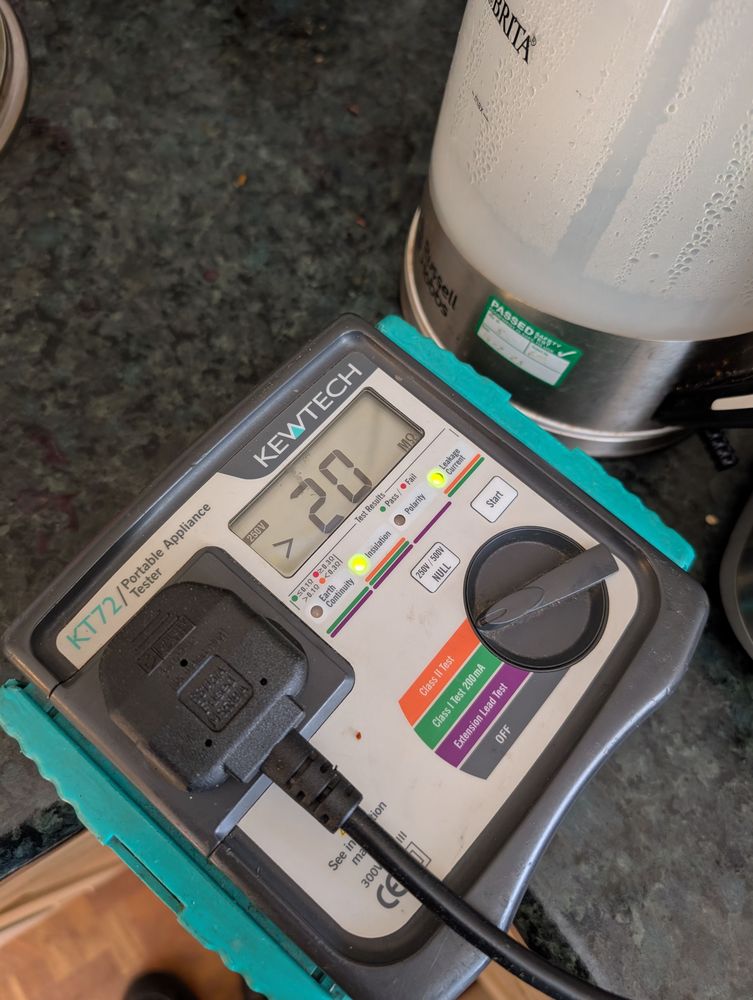
PAT Testing Kettle
PAT Testing Guide: What Electricians Need to Know in 2026
PAT testing is not a magic annual tick-box. The real job is maintaining portable and transportable electrical equipment so it remains safe to use, then keeping evidence of what was checked and what happened next.
That matters because “PAT testing” gets used to describe several different things: a user’s pre-use check, a formal visual inspection, and instrument testing. They are not interchangeable, and not every appliance needs the same level of intervention.
This guide gives the practical UK-wide position for electricians and landlords. It covers the legal and guidance distinction, how to choose a proportionate approach, what to record, and where PAT work sits alongside an EICR. The landlord section flags the England-specific rules without pretending one set of regulations covers every UK nation.
The short answer: is PAT testing a legal requirement?
There is no blanket UK rule saying every portable appliance must receive an instrument PAT test at a fixed annual interval.
For equipment used at work, the Electricity at Work Regulations 1989 require electrical systems to be maintained, so far as is reasonably practicable, to prevent danger. The regulations do not prescribe one universal PAT interval for every appliance. The relevant duty depends on the work context, the equipment and the person responsible for managing the risk. See regulation 4 of the Electricity at Work Regulations.
The HSE position is the useful working answer: there is no legal requirement to have portable appliances tested at a particular interval. The inspection and testing regime should reflect the risk. HSE guidance describes a hierarchy that can include checks by users, formal visual inspection, and combined inspection and testing. Not every item needs the most involved option. See HSE guidance on maintaining portable and transportable electrical equipment.
So the question is not “when is the annual PAT due?” It is:
What level of checking is reasonable for this equipment, in this environment, with these users and this history?
That is a risk-management decision, not a sticker date.
What “PAT testing” actually includes
In everyday trade language, PAT testing can mean the whole maintenance process or just the instrument-testing part. Be clear about which one you are offering and recording.
User and pre-use visual checks
Users may be expected to carry out simple checks before use, where that fits the organisation’s arrangements and the equipment. They can look for obvious damage, signs of overheating, damaged plugs or leads, contamination, and anything else that makes the item unsuitable to use.
This is not a replacement for every formal inspection. It is one layer in the system. Users also need a clear way to report defects, and the organisation needs to act on those reports.
Formal visual inspection
A formal visual inspection is a more deliberate check by someone with the knowledge and experience needed for that task. It considers the appliance, flex, plug, connections and the conditions in which the equipment is used.
The visual inspection can be the right level of intervention for some equipment. It can also identify an item that should be isolated before anyone connects a tester.
Instrument testing where the risk justifies it
Instrument testing adds measurements to the inspection. It can be justified where the environment is harsh, the equipment is heavily used, damage or misuse is more likely, the appliance has a relevant history, or the inspection alone does not provide enough confidence.
The safe method depends on the appliance construction, the test equipment and the manufacturer’s instructions. For detailed test methods and limits, use the current IET Code of Practice for In-service Inspection and Testing of Electrical Equipment. Do not lift a generic test value from an old table and present it as a universal legal threshold.
The output should be an inspection or inspection-and-test record. There is no single UK government-issued “PAT certificate” format that, by itself, proves compliance. A sticker is a useful identifier or reminder. It is not the evidence base and it does not make an appliance safe forever.
How to choose a proportionate frequency
The interval is part of the risk assessment. HSE points to factors including the environment, equipment type, frequency of use, likelihood of misuse or damage, age, manufacturer guidance and previous inspection results.
Use those factors to set a review approach, not to fill in a universal frequency table.
| What to consider | Question to ask | Possible consequence |
|---|---|---|
| Environment | Is the appliance used in a clean, controlled space or somewhere wet, dusty, hot, outdoor or rough? | A harsher environment may justify more frequent checks or a higher level of inspection. |
| Equipment type | What is the construction, and what can fail or become exposed? | The appliance and manufacturer instructions may affect the safe inspection and test method. |
| Use | How often is it moved, connected, disconnected or handled? | Frequent handling can increase the chance of damage. |
| Users | Are users trained and likely to report defects, or is misuse more likely? | The user-check layer may need clearer controls and closer formal oversight. |
| History | Has the item failed, been repaired, moved between sites or previously shown defects? | The next review should reflect the history rather than blindly repeat the old interval. |
| Evidence | Can you identify the asset and show what was done? | Weak records make it harder to demonstrate a managed maintenance process. |
Treat any interval table as a starting point for a documented decision, never as law. Review the decision when the environment, use, users, equipment or defect history changes.
A practical PAT workflow for electricians
The exact paperwork will vary, but a defensible workflow is straightforward.
1. Identify the asset
Give the appliance a clear asset ID and record its location. If it moves between rooms, properties or sites, the record needs to follow it. Record enough description to distinguish it from similar equipment.
2. Understand the use and history
Ask where the equipment is used, who uses it, how often it is moved, whether it has been repaired, and whether previous records show defects. This is the information that makes the inspection proportionate instead of automatic.
3. Inspect before testing
Look at the appliance body, lead, plug, flex entry, strain relief and visible connections. Consider signs of damage, overheating, contamination, wear or unsuitable use. Follow the appliance manufacturer’s instructions and do not use a test method that could damage the equipment.
4. Decide the test scope
Choose whether the evidence is provided by the user-check arrangement, a formal visual inspection, or inspection combined with instrument testing. Record why that scope was chosen. If the risk or condition changes, the scope can change too.
5. Test safely when required
Use suitable, maintained test equipment and a method appropriate to the appliance. Appliance construction matters. So do the manufacturer’s instructions and the current IET Code of Practice. Do not assume that a Class I, Class II or extension-lead label tells you everything needed for a safe test.
6. Record the result and any action
Record the inspection or test result, defects found, and action taken. If an item is unsafe or its condition is uncertain, it should not simply receive a pass sticker. The process needs to cover isolation, repair or replacement, and retesting where appropriate.
7. Set the next review rationale
Record why the next review point was chosen. That rationale is more useful than copying an annual date across every asset. It also gives the next person something to reassess when the equipment moves or the working conditions change.
Class I, Class II and extension leads: what changes?
The appliance class affects the protection arrangement and the test method, but it is not a licence to apply one generic sequence to everything.
For Class I and Class II equipment, confirm the construction and use the instructions for the appliance and test instrument. Extension leads and portable distribution equipment also need to be considered as equipment in their own right. Check their condition, identification, use and environment, not just the appliance plugged into them.
Keep detailed test sequences, pass limits and appliance-specific decisions tied to the current IET Code of Practice and manufacturer instructions. This guide intentionally does not publish numeric thresholds. A value copied from an old tester guide or a different appliance can give a false sense of certainty.
The practical rule is simple: classify the equipment, inspect it properly, choose a justified test method, and record what you actually did.
PAT testing for landlords and rented property
Do not bundle portable-appliance checks, fixed-installation inspection and workplace duties into one generic “landlord PAT certificate”. They are different questions.
The equipment supplied with a tenancy may need a sensible inspection and maintenance arrangement, depending on what is supplied, how it is used and the relevant responsibilities. A portable-appliance record does not replace the inspection of the fixed installation, and an EICR does not automatically document every portable item in a property.
For England, the Electrical Safety Standards in the Private Rented Sector (England) Regulations 2020 concern fixed electrical installations in specified privately rented properties. They do not create a blanket annual PAT requirement for every appliance. Read the England regulations alongside the facts of the tenancy and the equipment supplied.
Scotland, Wales and Northern Ireland have their own legal and regulatory context. Do not copy an England-specific landlord statement across the UK. Check the rules for the nation, tenancy type and equipment concerned, and keep the fixed-installation and portable-equipment records distinct.
What should a PAT record or report contain?
The record should let another competent person understand what was checked, where, when, by whom, and what happened to any defect. Useful fields include:
- asset ID and appliance description
- location or site
- appliance class, where known and relevant
- date of the check
- type of intervention: user check, formal visual inspection, instrument test, or a combination
- visual findings
- test method and results, where instrument testing was carried out
- overall result or condition decision
- defect, risk or limitation identified
- action taken: left in service, isolated, repaired, replaced or scheduled for follow-up
- person carrying out the work and the competence or supervision arrangement
- next-review rationale
The person carrying out maintenance, inspection or testing must have the knowledge, training and experience needed for the task, or be appropriately supervised. “PAT” does not automatically mean “only a qualified electrician”, but neither does plugging in a tester make someone competent to assess every appliance.
Keep the record connected to the asset. A loose spreadsheet row, an unreadable sticker or a certificate with no asset reference is weak evidence. The useful record is the one that supports the maintenance decision and the follow-up action.
Common PAT myths that catch people out
“Every appliance needs an annual PAT test”
No. HSE says there is no legal requirement to test portable appliances at a particular interval. The approach should reflect risk and be reviewed when circumstances change.
“A landlord always needs a PAT certificate”
No single certificate is a universal landlord requirement across the UK. Portable equipment, fixed installations, tenancy arrangements and national rules need to be considered separately.
“A visual check is never enough”
Not correct. HSE’s hierarchy includes user checks and formal visual inspection as well as combined inspection and testing. The right level depends on the risk and the maintenance arrangement.
“A pass sticker proves the appliance is safe”
It proves, at most, that a particular check was recorded at a particular time. Damage can happen afterwards. Users still need to check equipment and report defects.
“Any electrician can test any appliance without checking the method”
Competence matters, but so do the equipment and the method. Use the current IET guidance and manufacturer instructions. Record what was done rather than relying on a generic label.
How TestFast fits alongside PAT and EICR work
PAT work and EICR work are not the same inspection. The useful connection is the workflow around them: identified equipment, clear findings, defects, actions and a record that can be found again on the next visit.
For teams already using TestFast for electrical job and EICR records, PAT-related notes and follow-up actions can sit alongside the wider job workflow where that matches the team’s setup. That can make repeat visits easier to understand and keep the fixed-installation and portable-equipment evidence visible in the same project context.
TestFast does not determine a statutory PAT frequency, carry out electrical PAT testing, replace competent-person judgement, or issue a PAT certificate. It is the record and reporting workflow that matters here. See the EICR checklist, electrical testing software, and electrical contractor software pages for the adjacent workflow.
PAT testing checklist
Before closing the job, check that you have:
- identified each appliance or equipment item clearly
- considered environment, use, users, age, manufacturer guidance and history
- separated user checks, formal visual inspection and instrument testing in the record
- used a safe, equipment-appropriate method
- recorded the result and any defect
- isolated, repaired, replaced or scheduled follow-up for failed or uncertain items
- recorded who carried out the work and the competence or supervision arrangement
- set the next review point with a reason
- kept PAT records distinct from, but easy to find alongside, fixed-installation records
PAT testing FAQ
Is PAT testing legally required in the UK?
There is no blanket requirement to instrument-test every portable appliance at a fixed annual interval. For work equipment, electrical equipment still needs to be maintained so far as is reasonably practicable to prevent danger. The inspection and testing approach should reflect the risk. Start with the HSE guidance and the circumstances of the equipment.
How often should PAT testing be done?
There is no single interval that applies to every appliance. Consider the environment, equipment, use, users, damage risk, age, manufacturer guidance and previous results. Record the reason for the review approach and revisit it when those factors change.
Who can carry out PAT testing?
The person doing the maintenance, inspection or testing needs the knowledge, training and experience for the task, or appropriate supervision. The right person depends on the work being done and the equipment involved. Do not reduce competence to a job title or a sticker.
Do landlords need a PAT certificate?
There is no universal UK rule requiring a single PAT certificate for every landlord and every appliance. In England, the 2020 private-rented-sector regulations concern fixed electrical installations in specified properties and do not create a blanket annual PAT requirement. Check the relevant nation, tenancy and supplied equipment.
What happens when an appliance fails?
Record the defect, prevent unsafe use, and follow the agreed process for isolation, repair or replacement and retesting where appropriate. Do not leave a failed or uncertain item in service simply because the sticker is convenient.
Is a PAT certificate required?
No single government-issued PAT certificate format, by itself, demonstrates compliance. What matters is a proportionate maintenance system and a record showing the equipment identified, the checks or tests carried out, the person responsible, the result and any action taken.
Is PAT testing the same as an EICR?
No. PAT concerns portable and transportable equipment. An EICR concerns the condition of a fixed electrical installation. They can be managed in the same job or reporting workflow, but one does not automatically document the other.
The practical takeaway
Stop treating PAT as an annual sticker round. Identify the equipment, understand the risk, choose the level of checking that the situation justifies, use the correct method, and record the decision and any follow-up.
That is the part that stands up: a proportionate inspection and maintenance process, backed by clear evidence.
Ready to transform your EICR workflow?
Join hundreds of UK electricians who are saving hours on every report with TestFast.